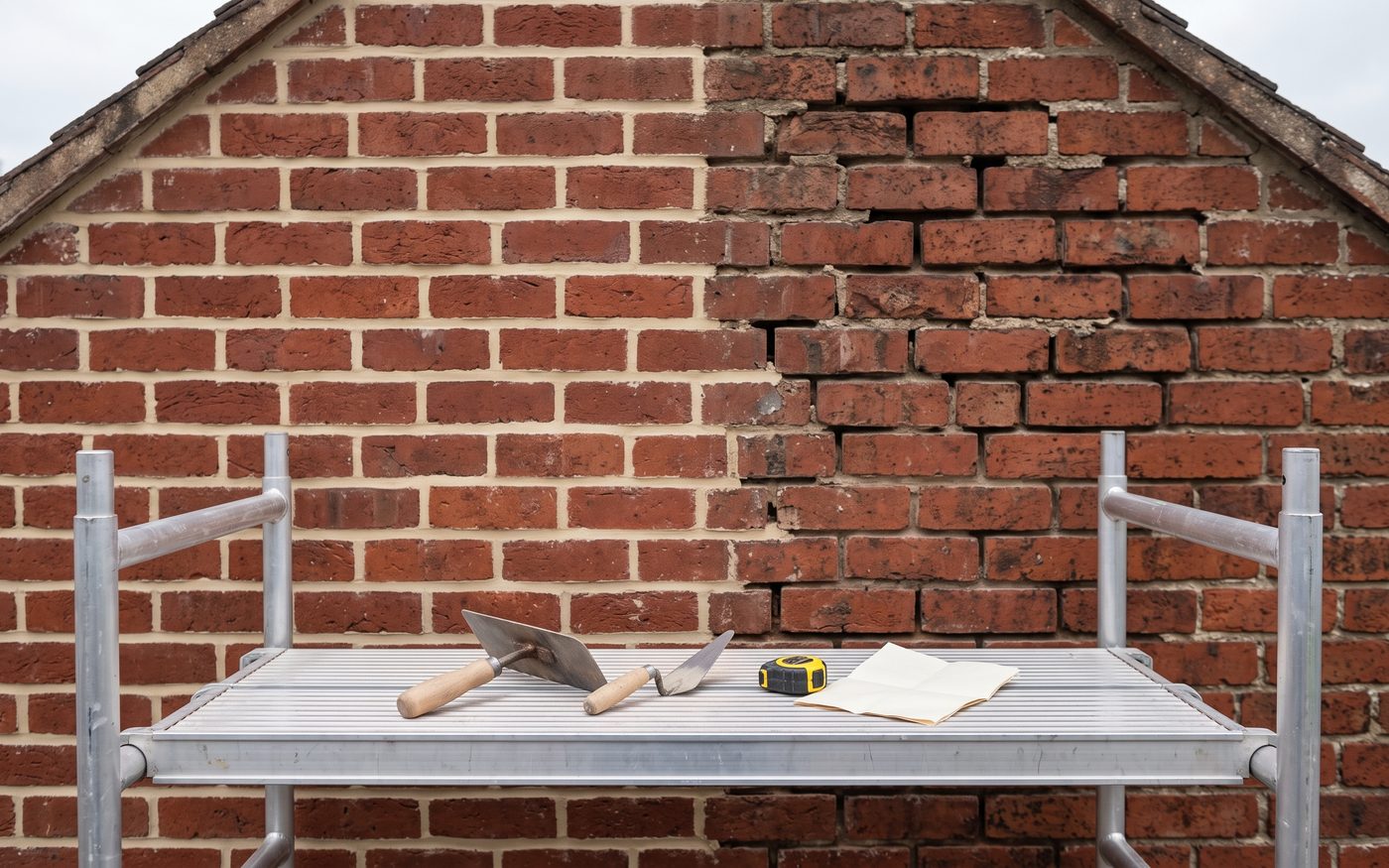
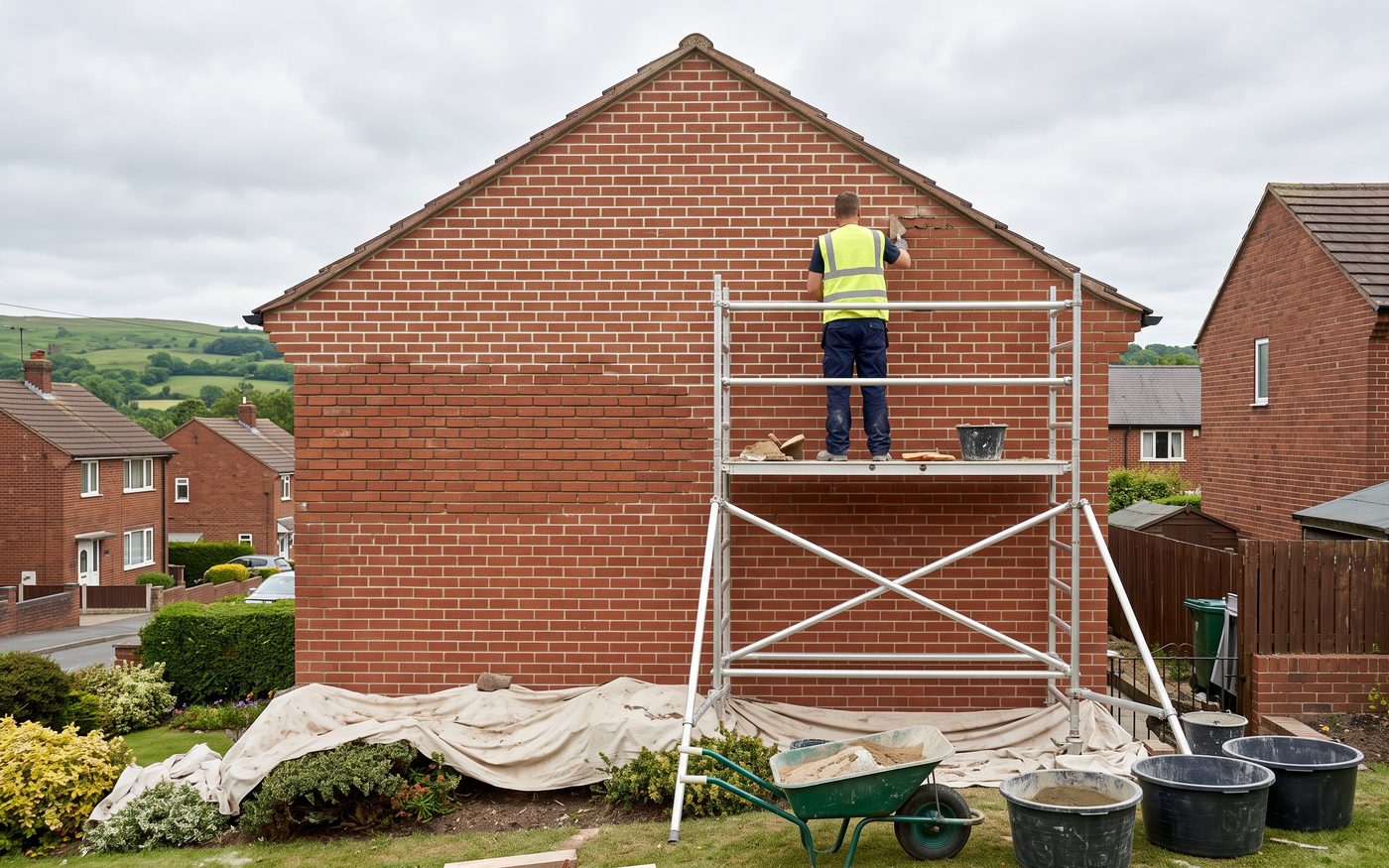
Mortar needs about the same conditions you'd want for sitting outside: mild, damp-ish, no frost and no blazing sun. In Greater Manchester that means the main repointing season runs from April to October, with lime work squeezed into the middle of it.
Why the weather matters
New mortar cures chemically, not by drying. Cement mortar reaches most of its strength in the first few days; lime carbonates slowly over weeks and months. In both cases the joint has to stay damp enough to cure but never freeze and never bake.
- Frost in the first days turns the water in fresh mortar to ice, which expands and breaks the joint from inside. It looks fine until spring, then crumbles. We don't point in cement below about 3°C and rising, and not in lime below 5°C — and that's the overnight temperature, not the daytime one.
- Hot sun and drying wind pull the water out of the joint before it has cured. The surface skins over, the inside goes powdery, and the pointing never bonds. A south-facing wall in July can be worse than a cold one in October.
- Driving rain on a fresh joint washes the fines out of the face and leaves it pale and weak. It also soaks the wall behind, so the mortar can't cure properly.
The season, month by month
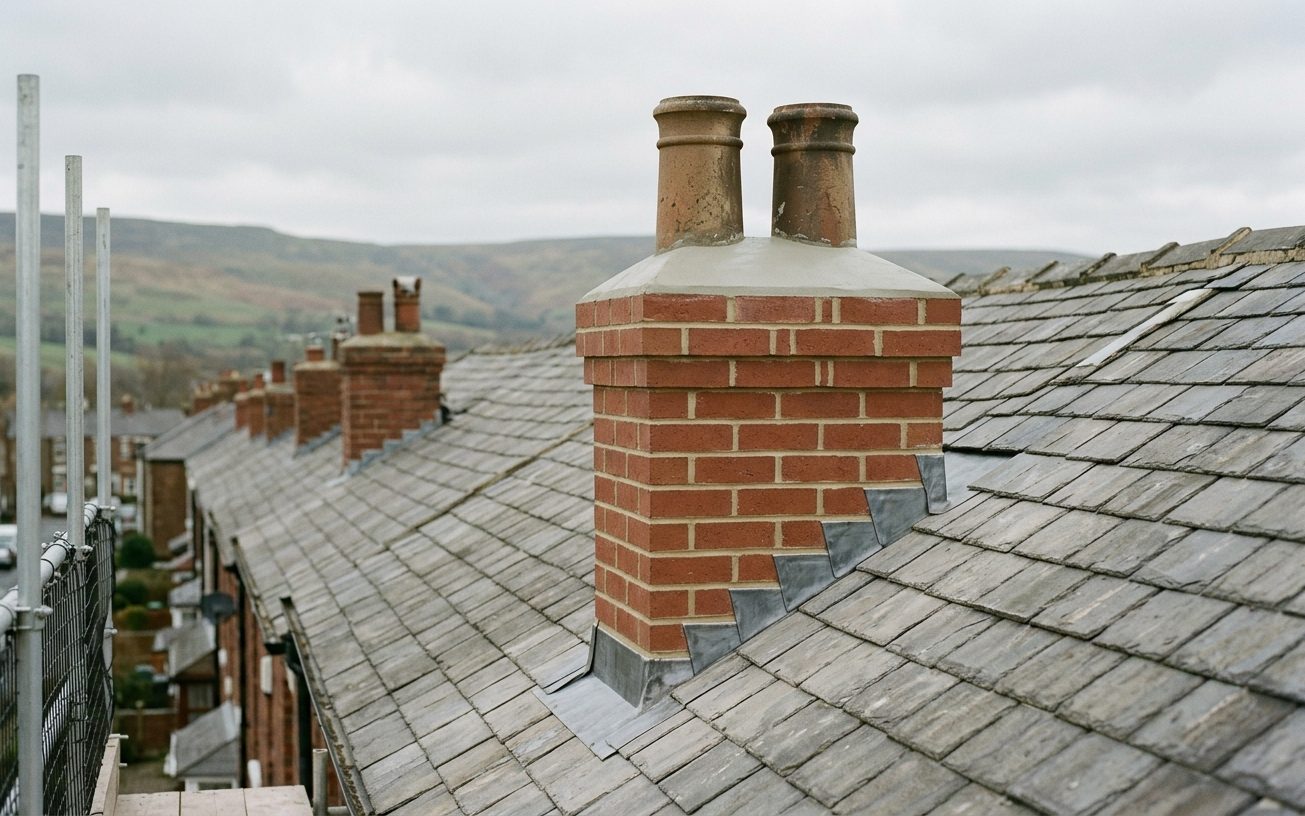
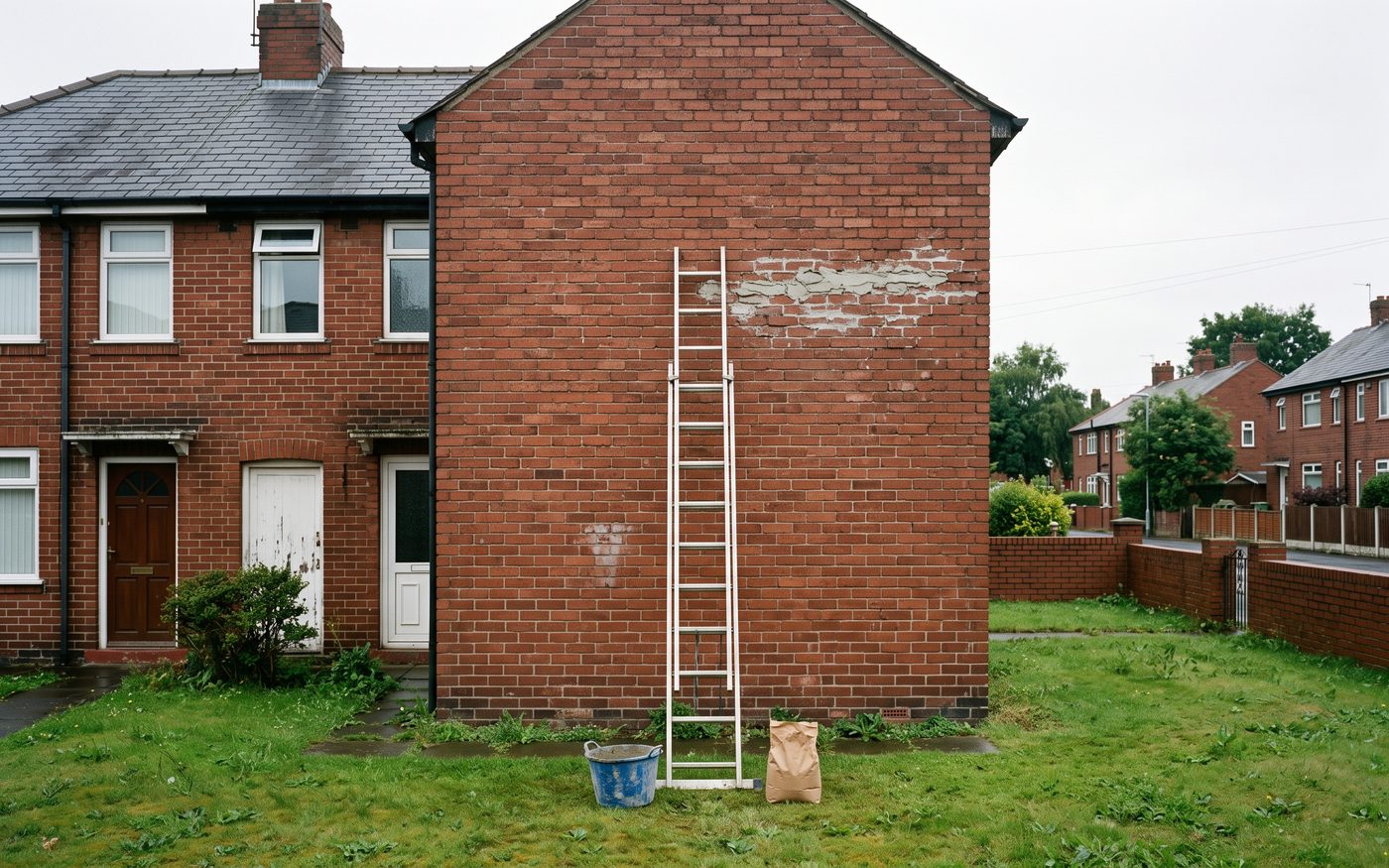
- March–April: cement work starts once the overnight frosts have gone. Good time for chimneys and gables before the summer rush.
- May–June: ideal. Mild, long days, walls not yet baked. We book most lime work for now.
- July–August: fine, but on hot spells we work the shaded elevations and keep the finished work damp under hessian. Lime is sheeted and misted.
- September–October: the second-best window. Warm walls, cooler air, plenty of moisture. Lime work finishes by mid-October on exposed sites.
- November–February: cement repointing only on sheltered walls in mild spells, with the forecast watched every day. No lime. Chimneys wait, unless a stack is actively letting water in — then we make it safe and weatherproof and come back to finish in spring.
What we do about the Pennine weather
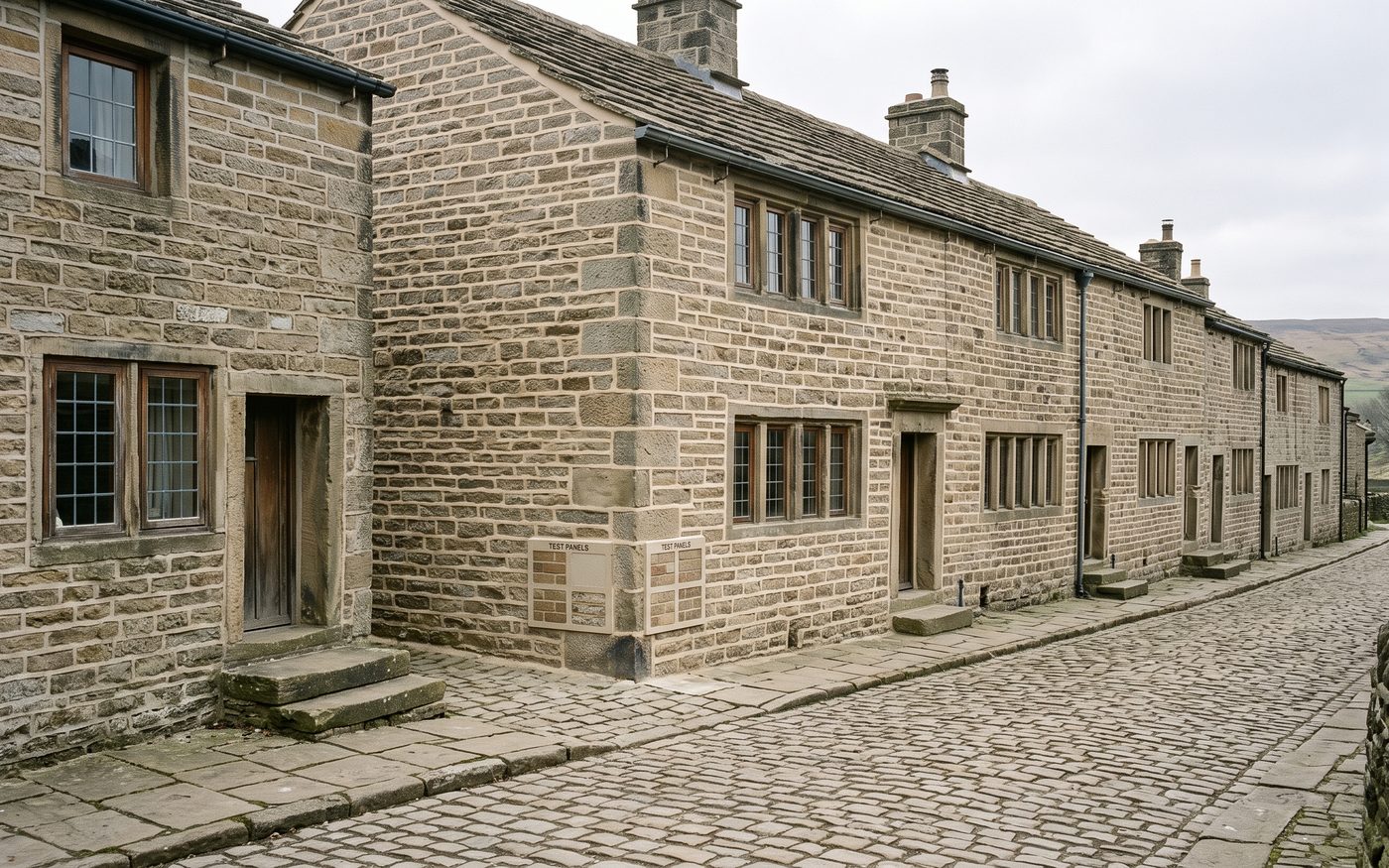
Sites above Littleborough, Whitworth, Milnrow and the Saddleworth villages are colder and wetter than the town, and a west-facing wall there is a different job from a sheltered one in Castleton. We schedule by site rather than by calendar, protect fresh work with sheeting on anything exposed, and will stop a job rather than point into weather that's going to undo it.
When to book
The diary fills from late spring. If you want lime work done in the best months, get the survey done in winter or early spring and the job booked for May or June. Cement work on a house is usually a two- to four-week wait in season; chimneys and small jobs can often be fitted in sooner.