Most damp patches on an outside wall in a house round here are penetrating damp, and most penetrating damp is coming through failed pointing. So yes, more often than not. But it's worth ten minutes checking before you spend the money, because repointing won't fix a leaking gutter or a condensation problem.
The three kinds of damp
- Penetrating damp comes through the wall from outside. It shows as a patch on an external wall or chimney breast that gets worse after rain and often dries back in summer. Failed pointing, spalled brick, cracked render, leaking gutters and bad flashing are the usual causes.
- Rising damp comes up from the ground. A tide mark up to about a metre from the floor, on ground-floor walls only, with salts on the plaster. Pointing has nothing to do with it.
- Condensation forms on cold surfaces inside. Black mould in corners, on north-facing walls, behind furniture and around windows, worse in winter, no relation to rainfall. Ventilation and heating problem, not a wall problem.
When repointing is the answer
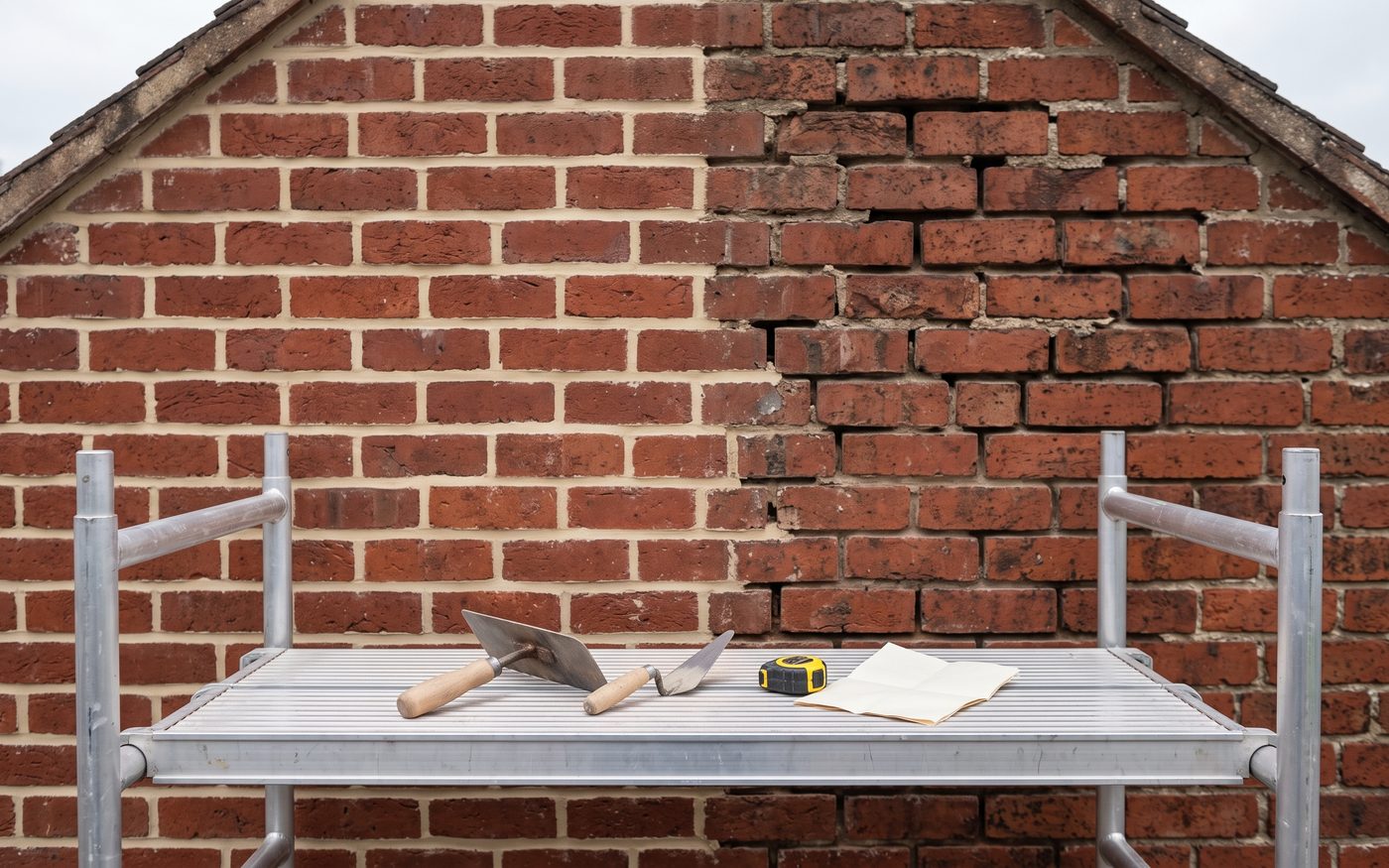
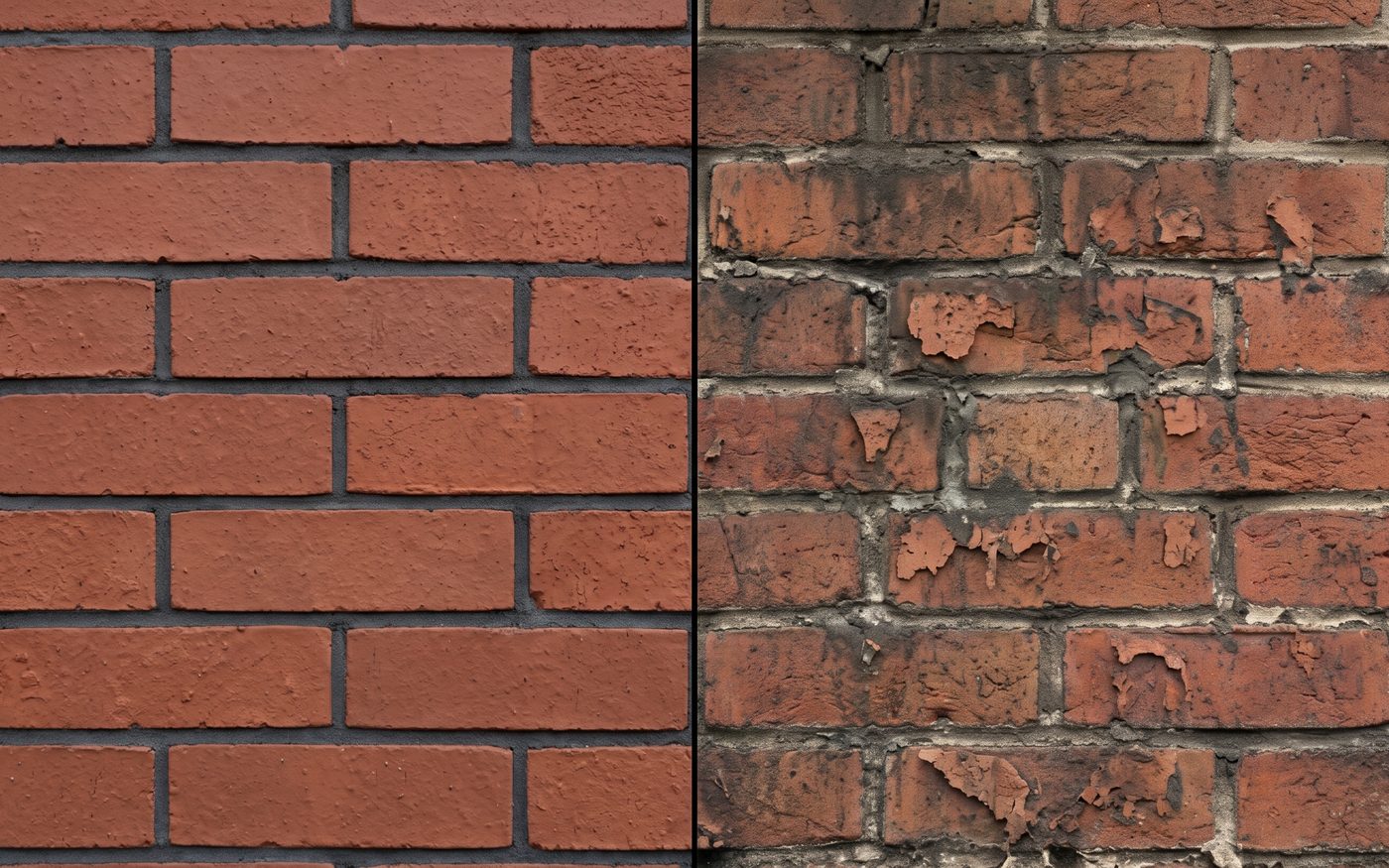
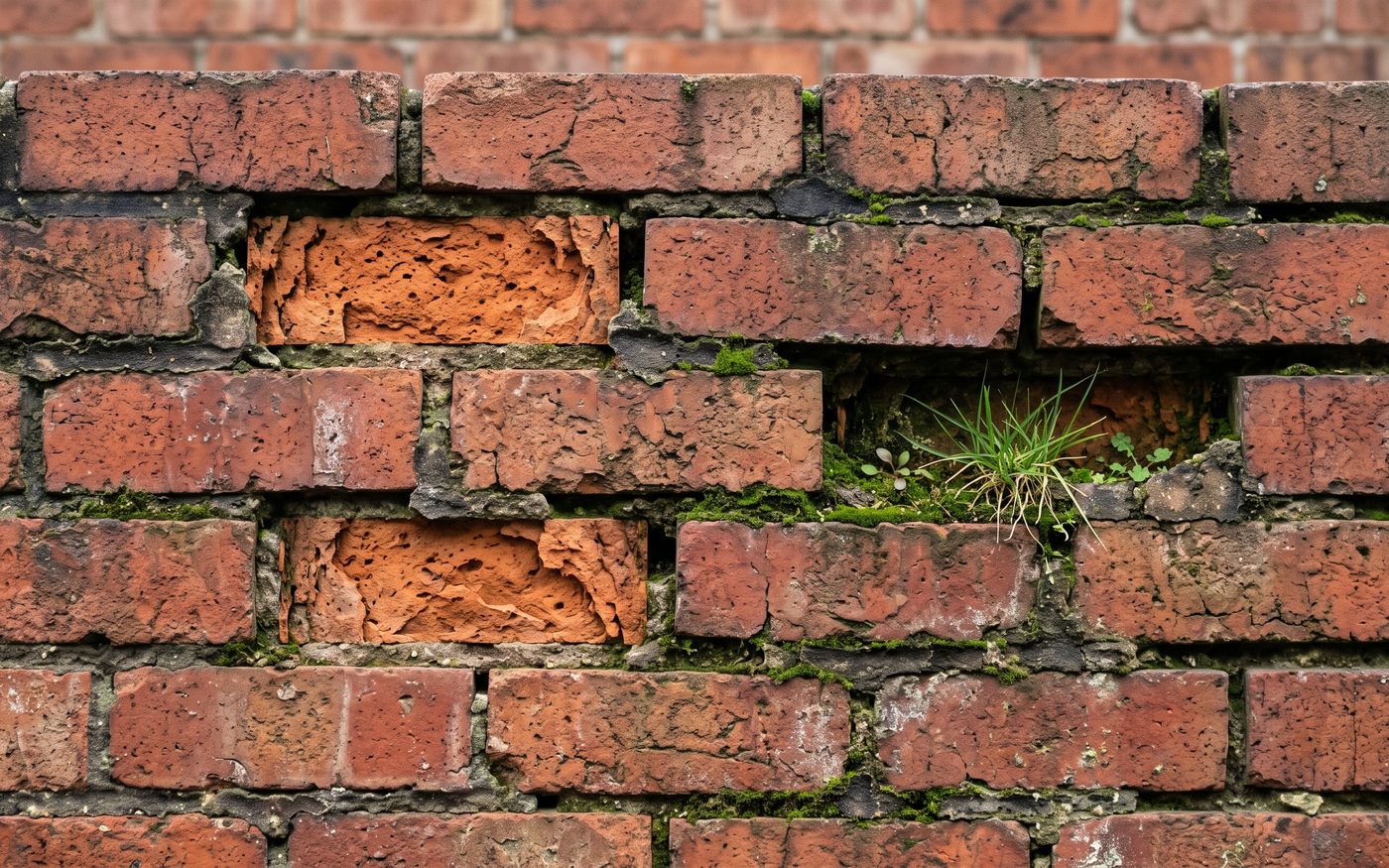
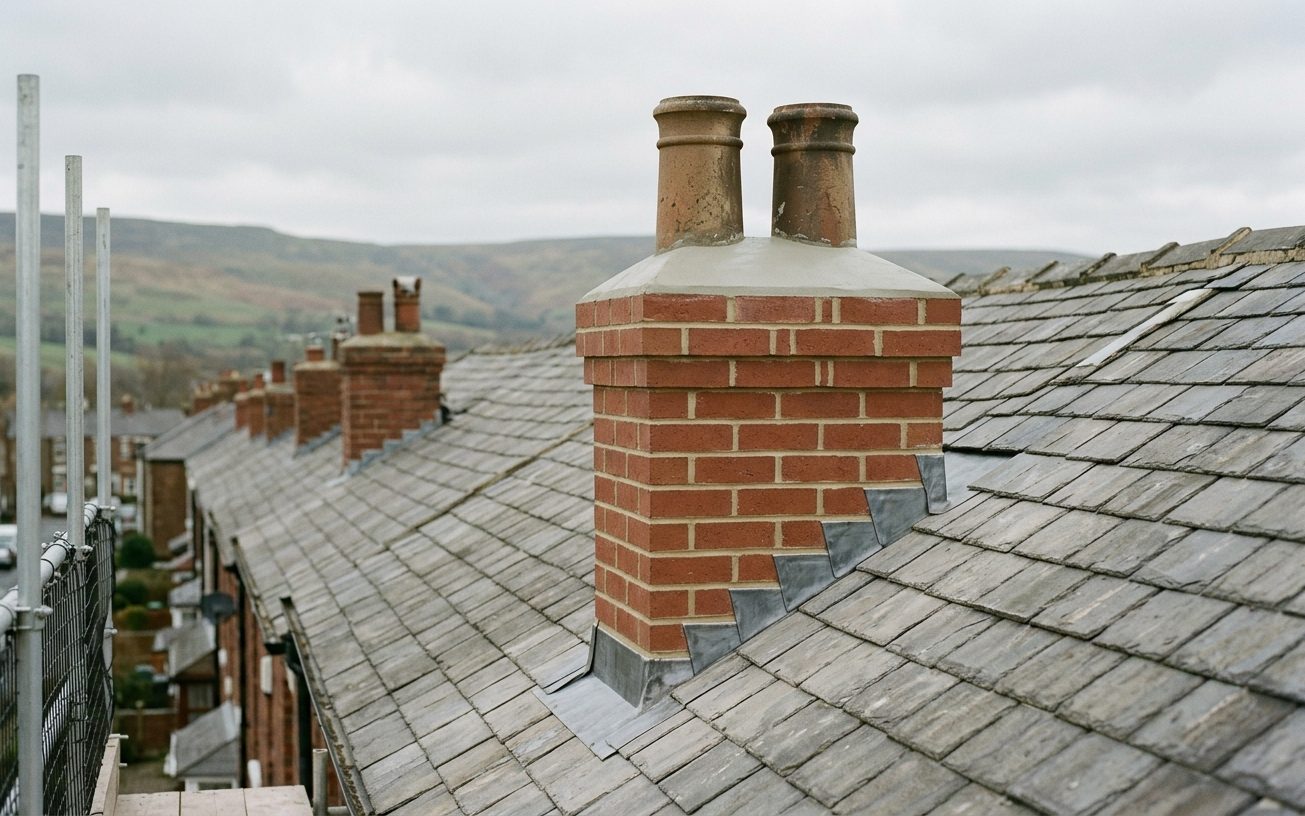
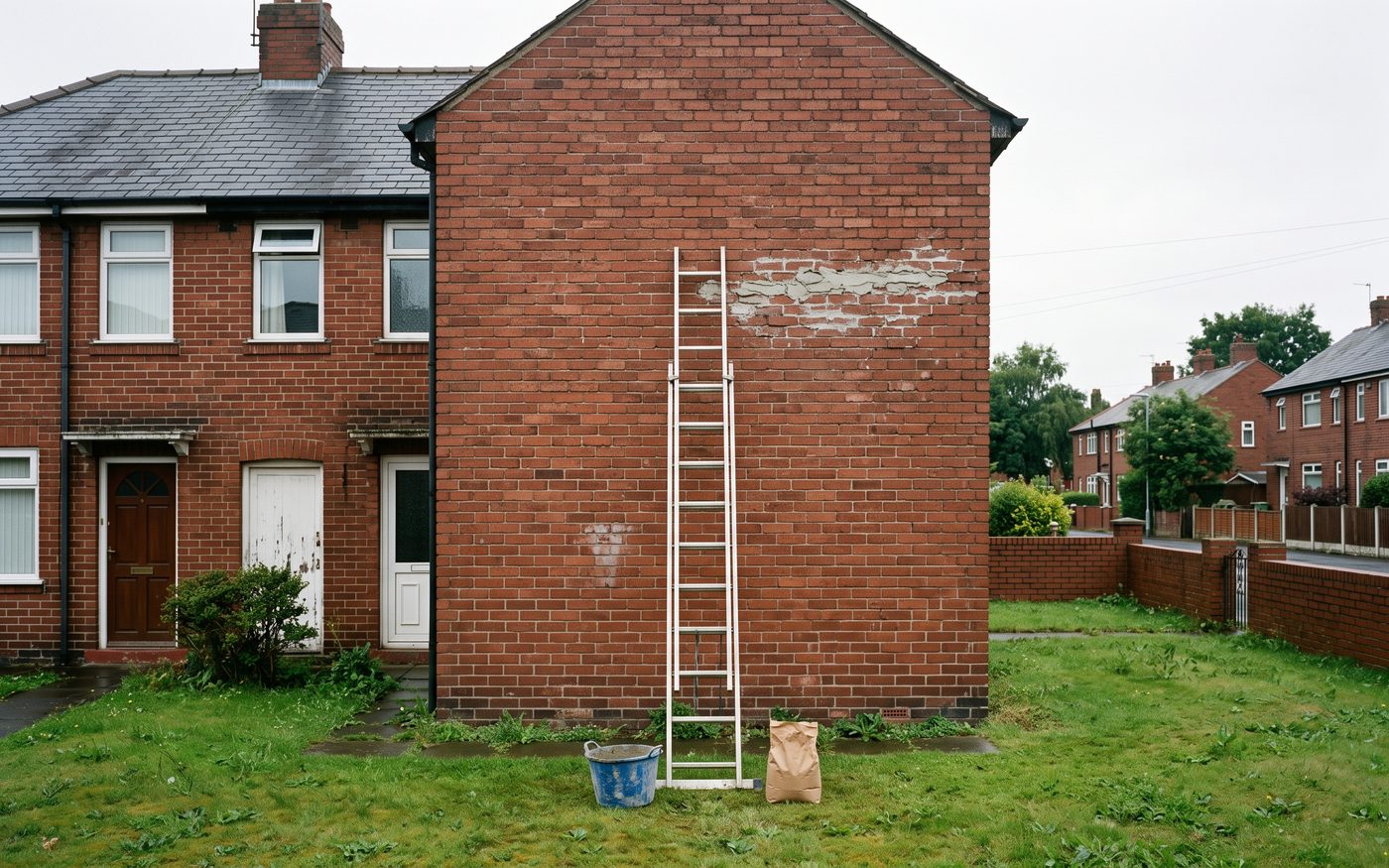
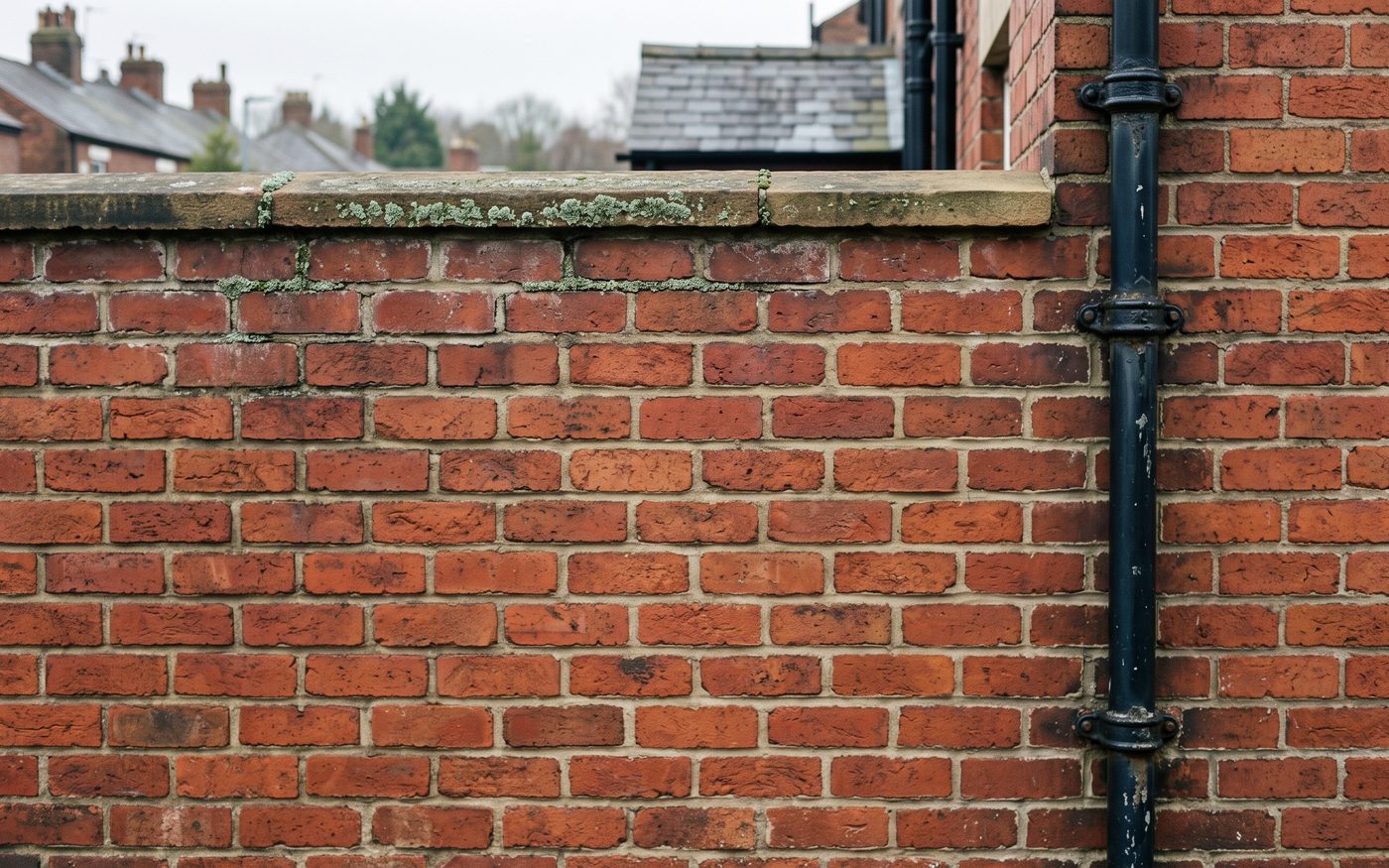
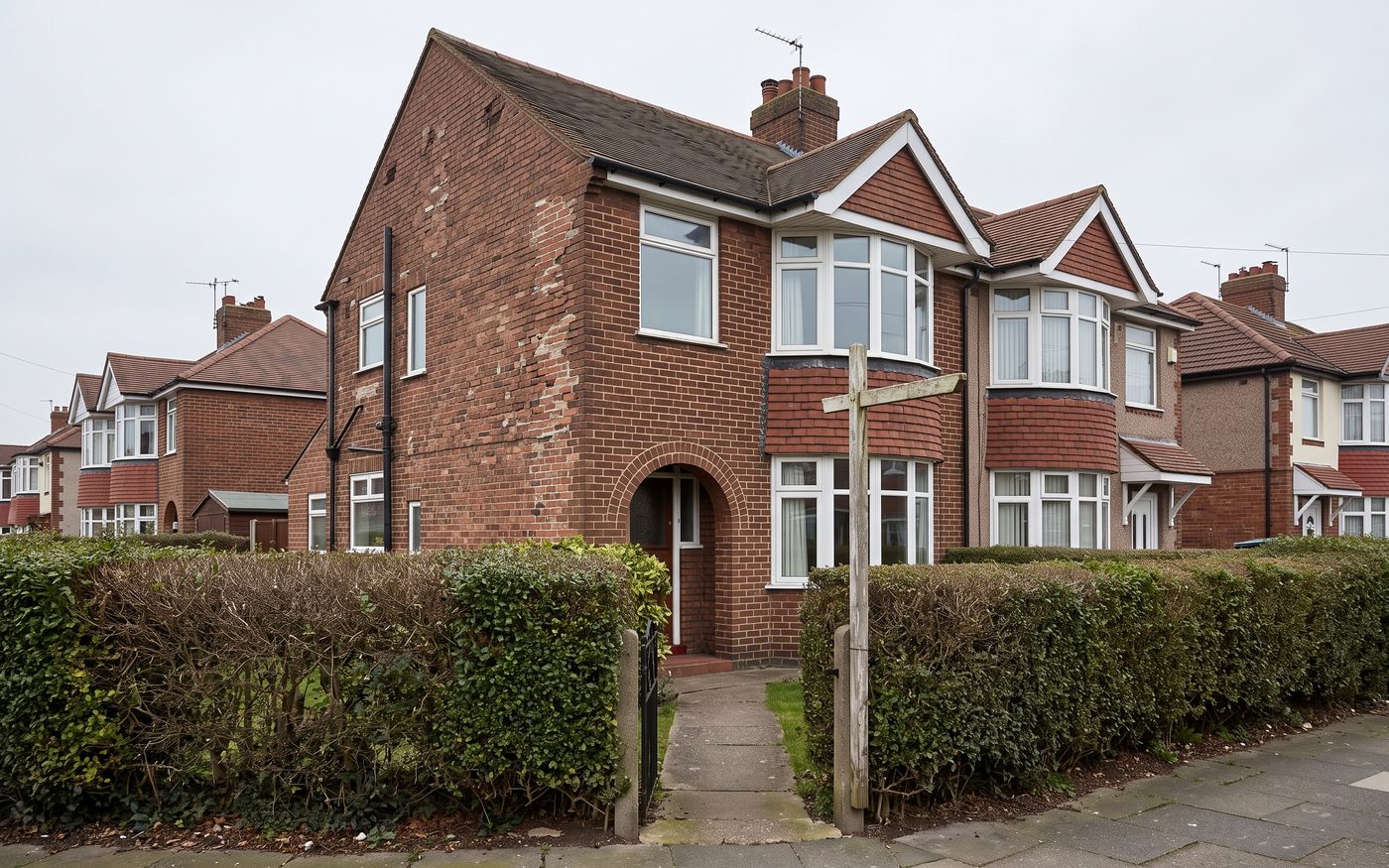
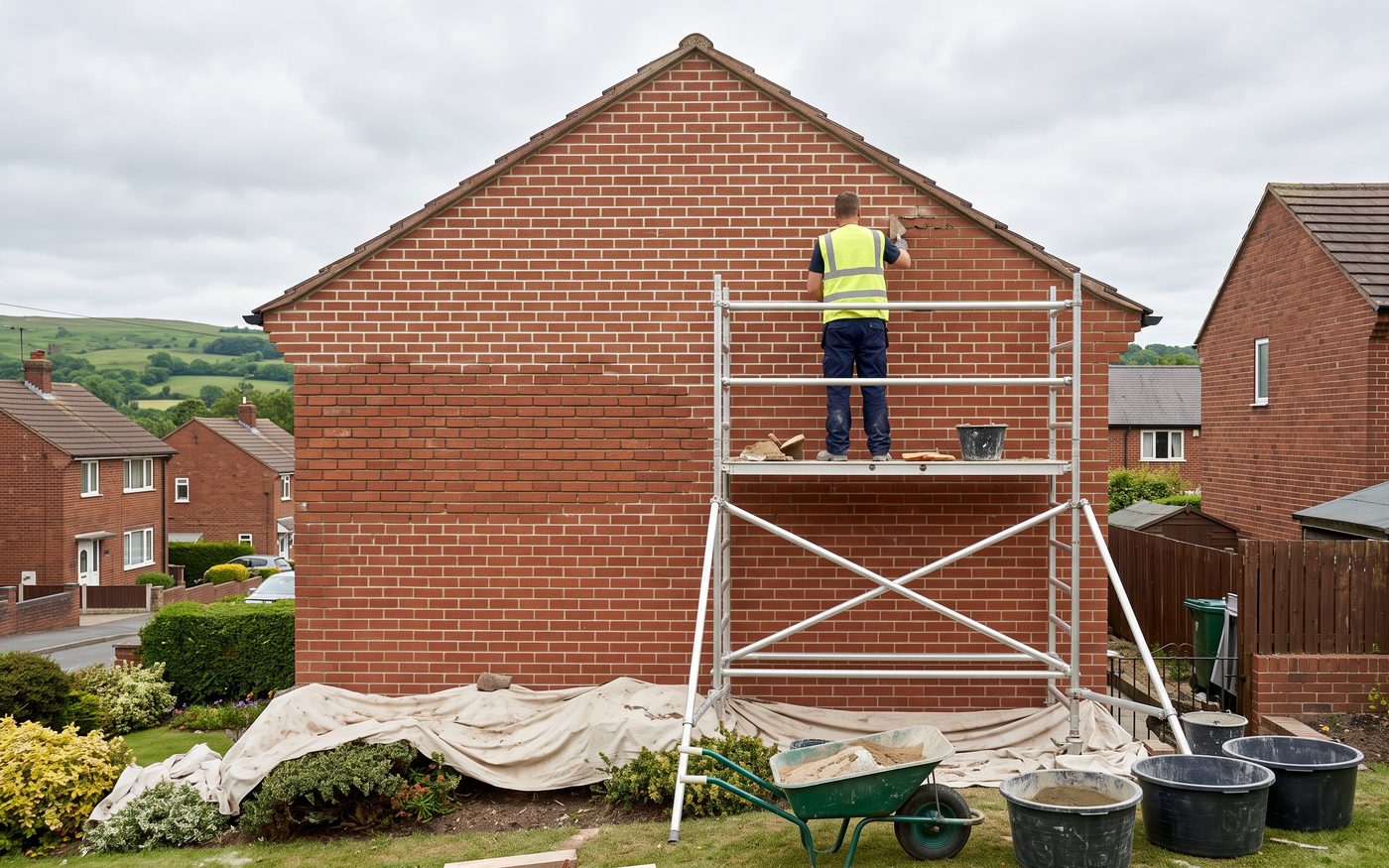
The give-aways for pointing: the patch is on an exposed elevation — west or north, or the gable facing the hills — it appears or spreads after a spell of rain, and outside, the joints on that stretch of wall are eroded, cracked or hollow. On a chimney breast, a damp patch high up on the wall, worst after rain from the west, is almost always the stack — failed pointing, cracked flaunching or perished lead. See chimney repointing explained.
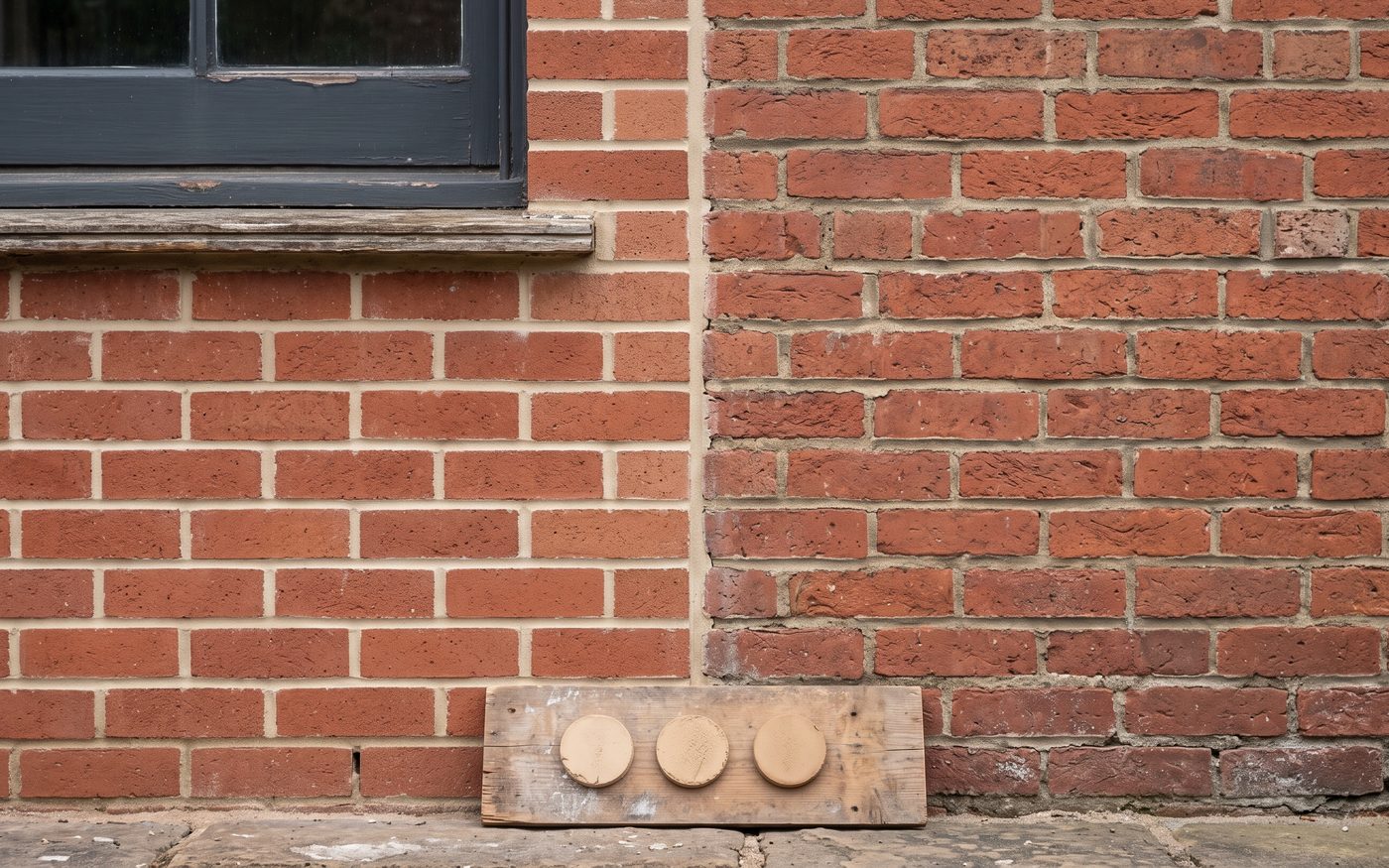
Water gets in through a joint, tracks through the solid wall (most pre-1930s houses round here have no cavity) and shows on the plaster. Rake out and repoint properly and the wall stops taking water in; it then takes weeks or months to dry out fully before you re-decorate.
When it isn't
Check these first, because they're cheaper:
- Gutters and downpipes. A blocked gutter or a cracked downpipe joint will soak one strip of wall every time it rains. Look for a green streak on the outside. Fix the gutter; the pointing under it may still need doing, but the leak is the cause.
- Window and door reveals. Perished sealant or a cracked cill lets water straight into the wall beside the frame.
- Flashing and roof edges. Lead flashing lifted at an abutment, or slipped slates, put water into the top of a wall.
- Cavity-wall problems. On a 1930s or later house with a cavity, damp on an inside wall is more likely to be debris bridging the cavity or a botched cavity-wall insulation fill.
Don't seal it
The wrong fix we see most is a clear "waterproofing" sealant brushed over the brick. It stops water going in, but it also stops the water already in the wall from getting out. The wall stays wet behind the sealant and the brick faces spall off in the frost. A wall needs to breathe; the right answer is sound pointing in the right mortar, not a coating.
What we'll tell you
Send photos of the patch inside and the wall outside and we'll say whether it looks like pointing or something else. If it's the gutter we'll say so — a survey that finds the real cause is worth more than a wall we didn't need to point.