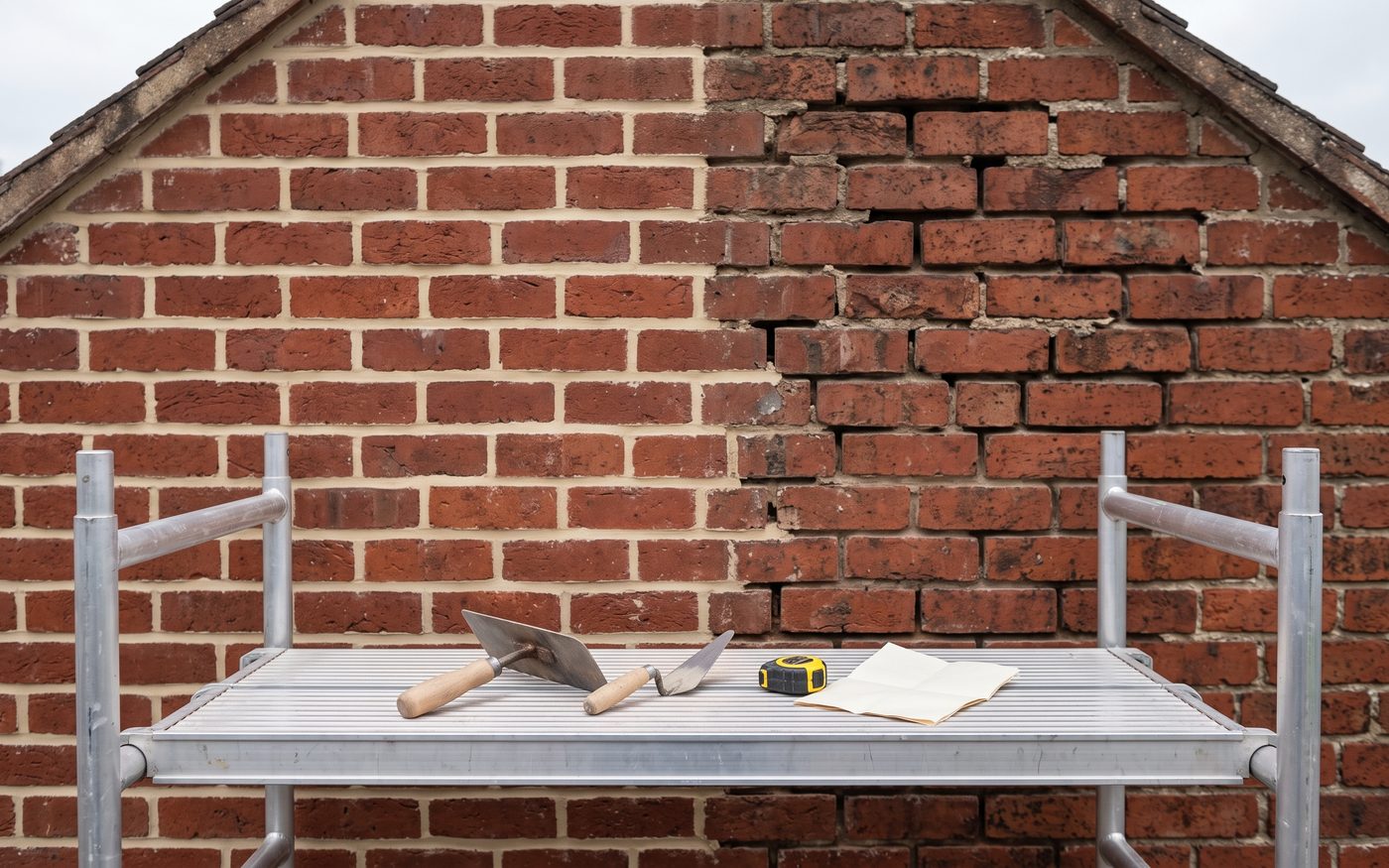
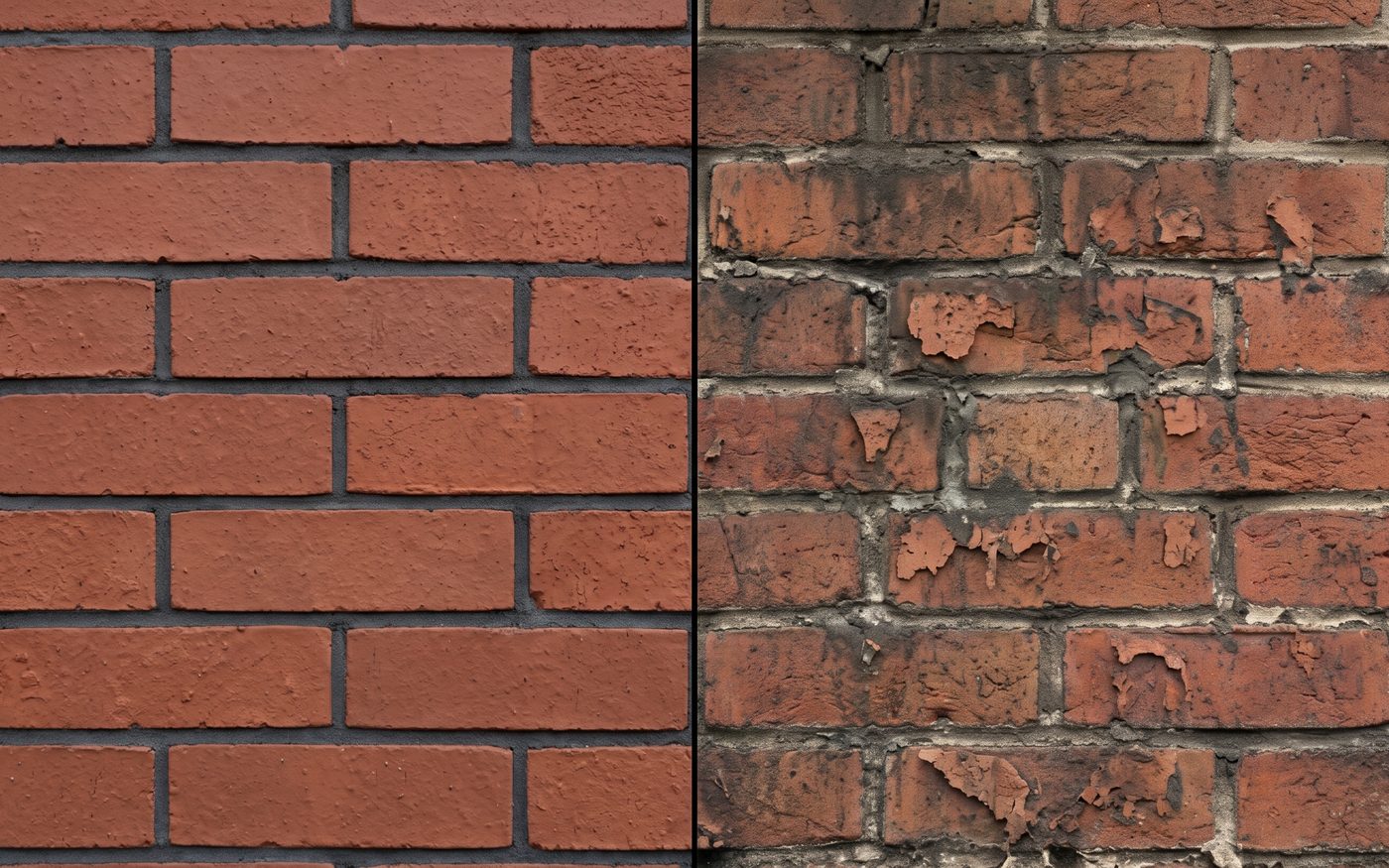
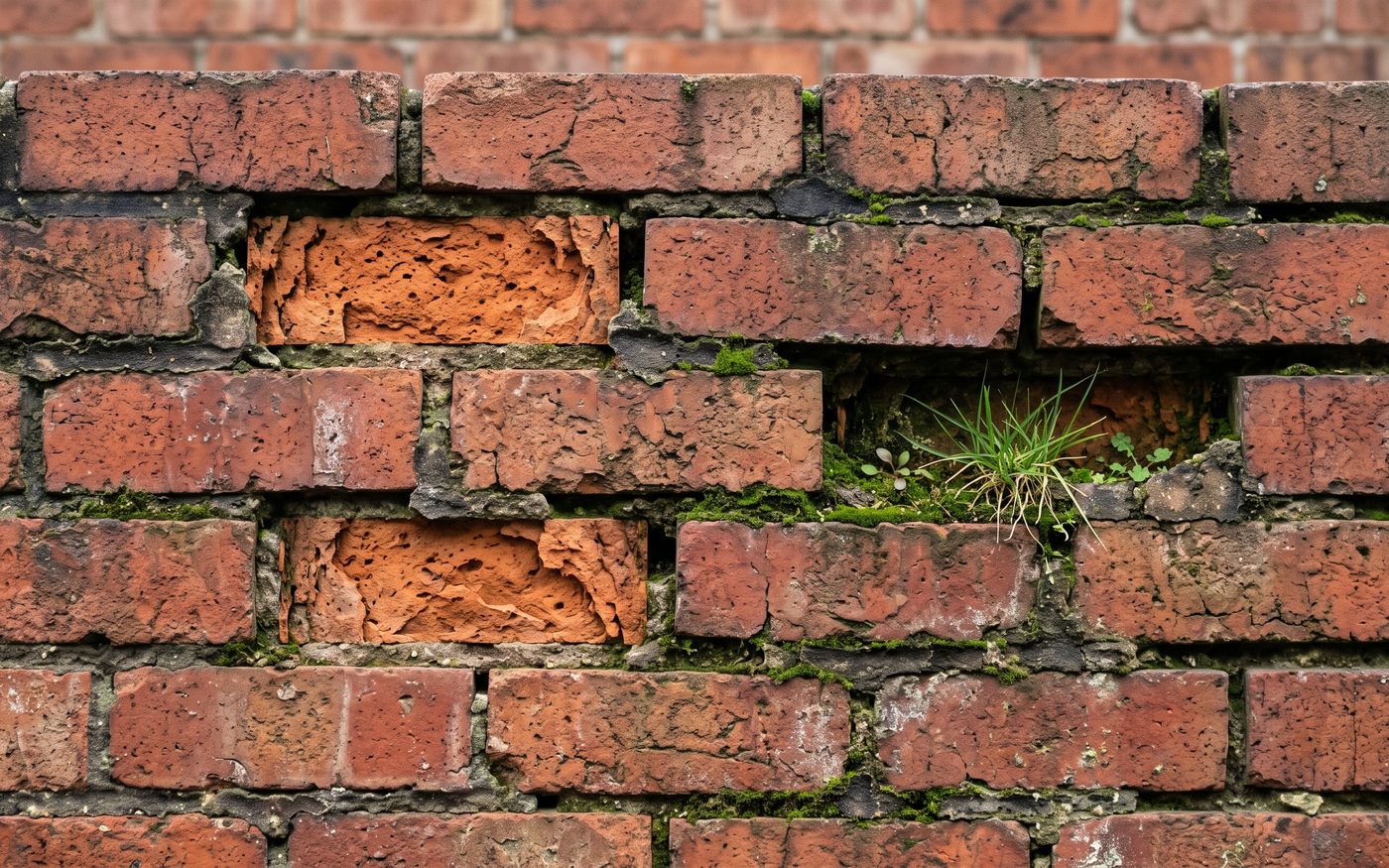
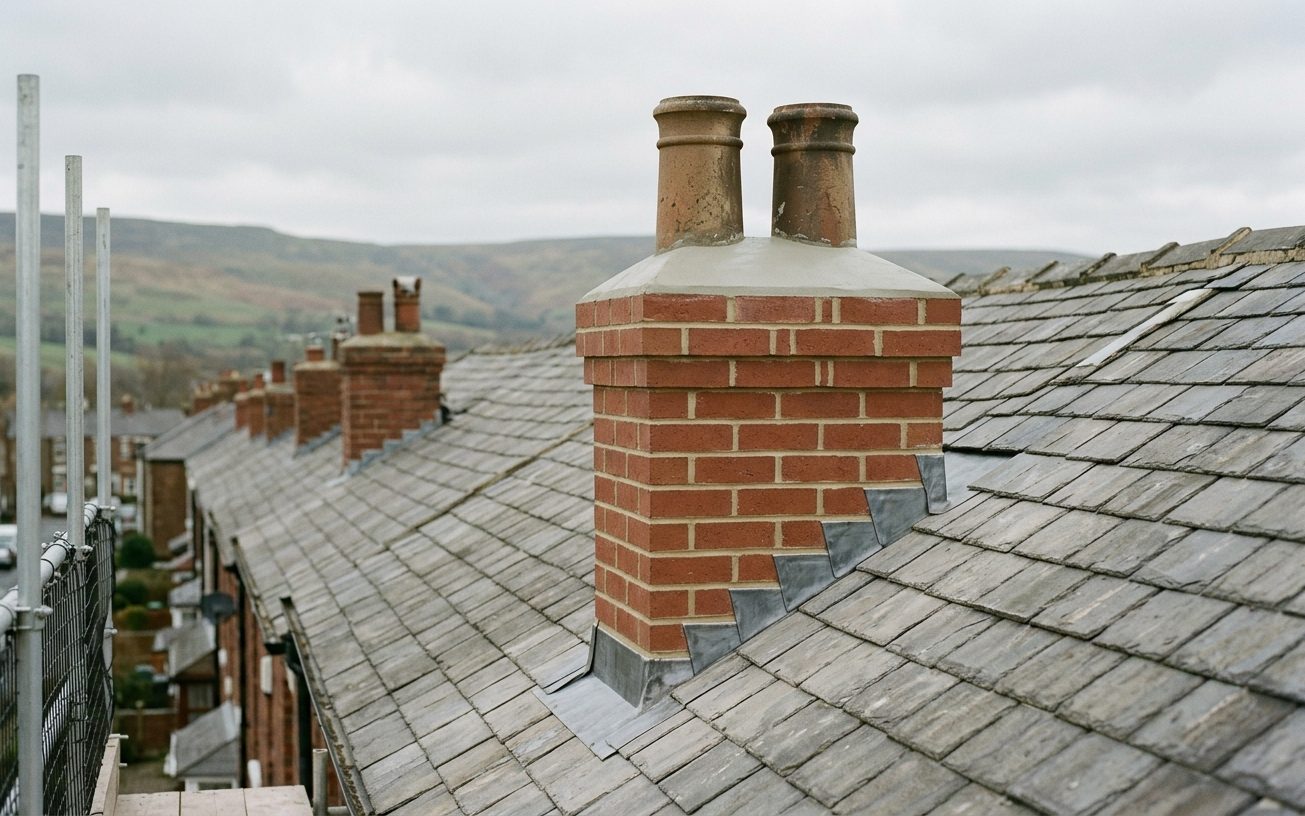
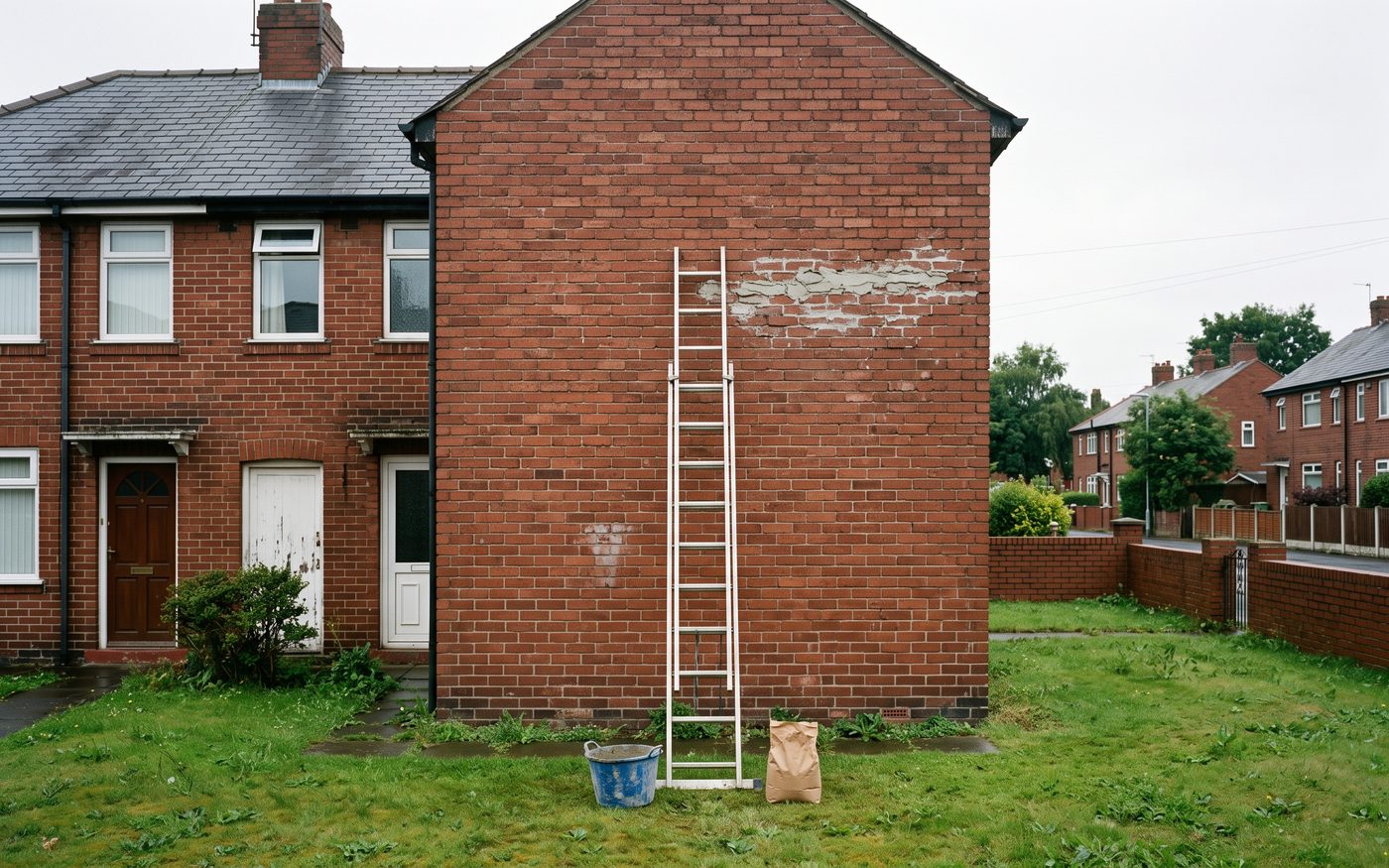
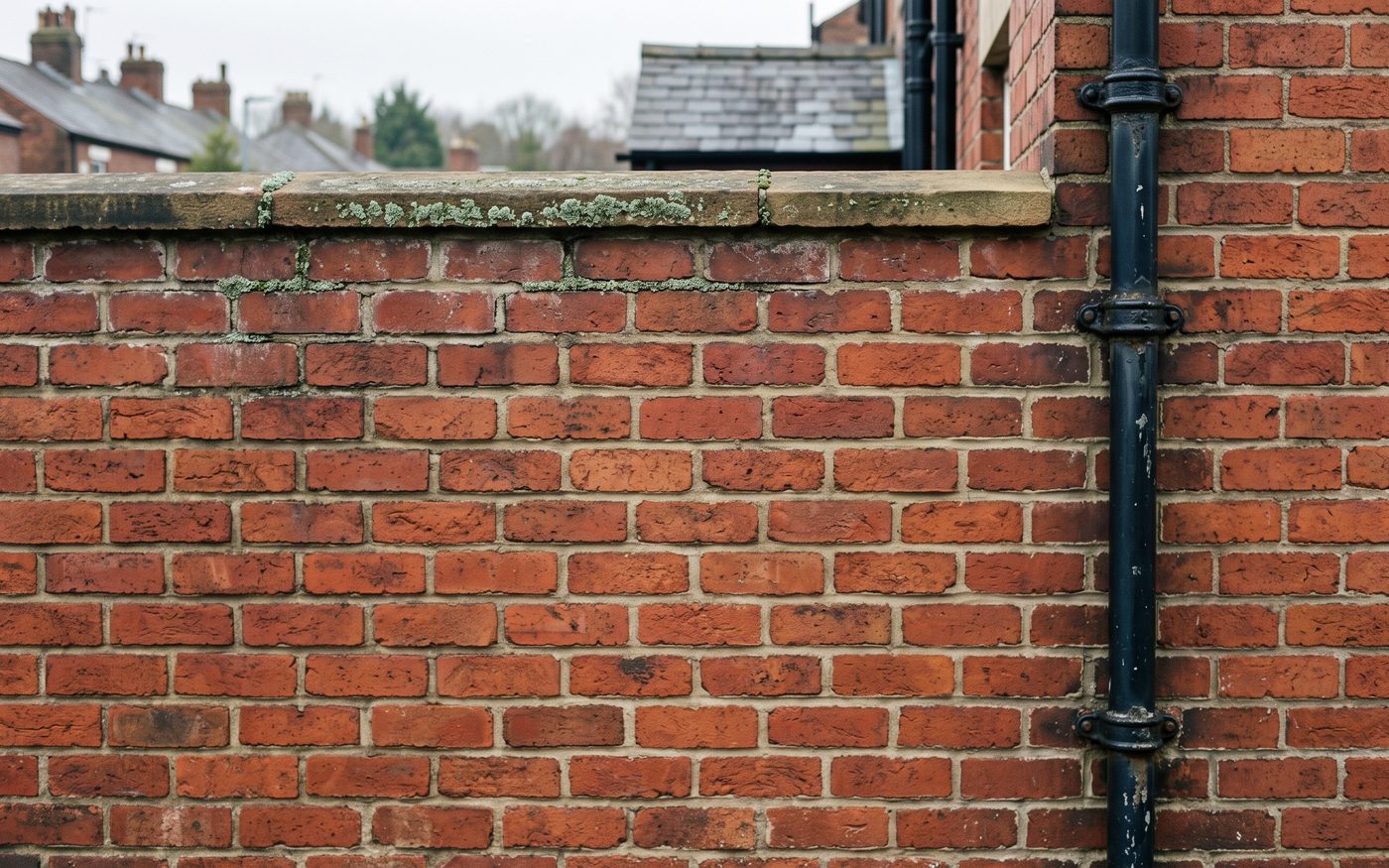
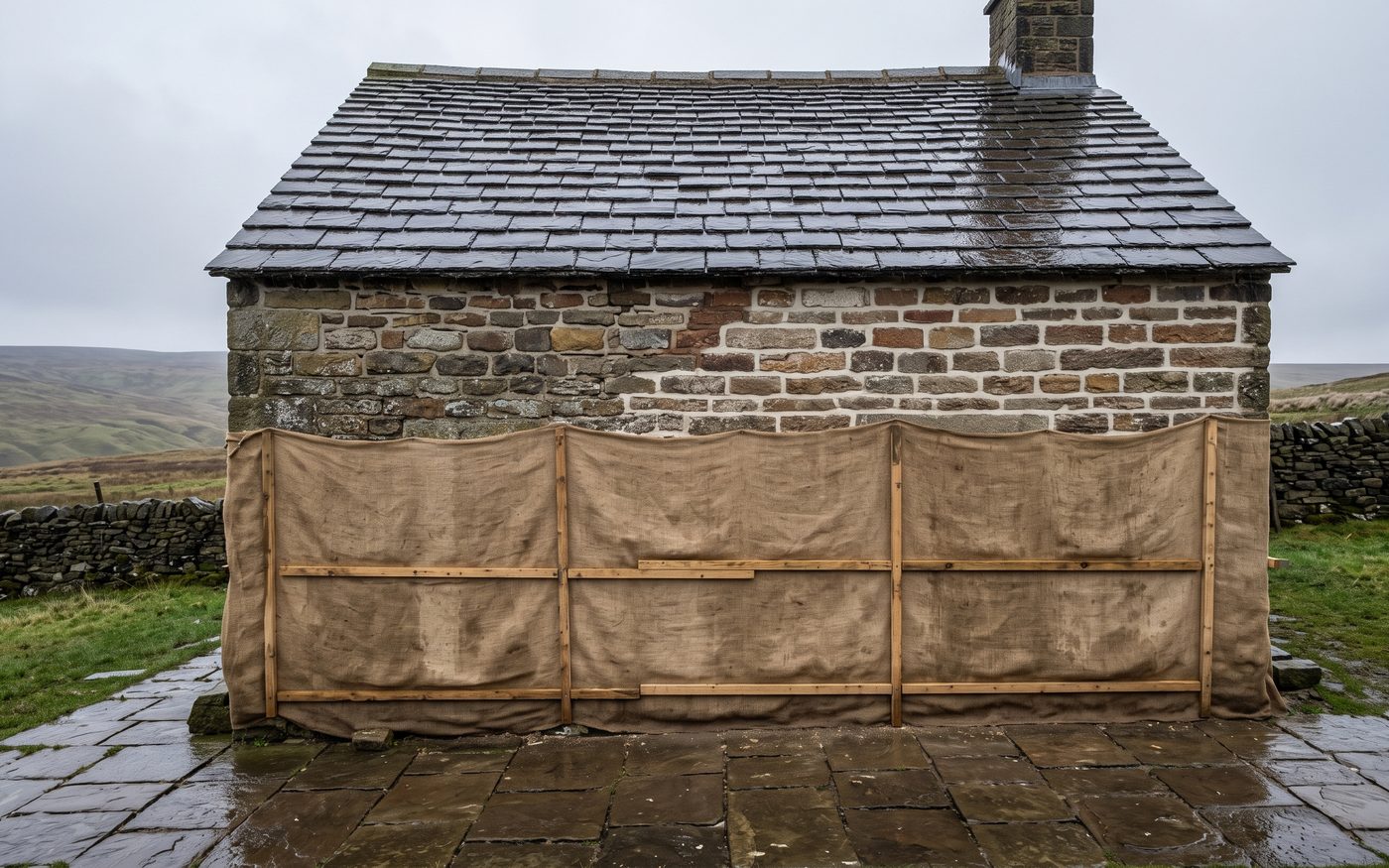
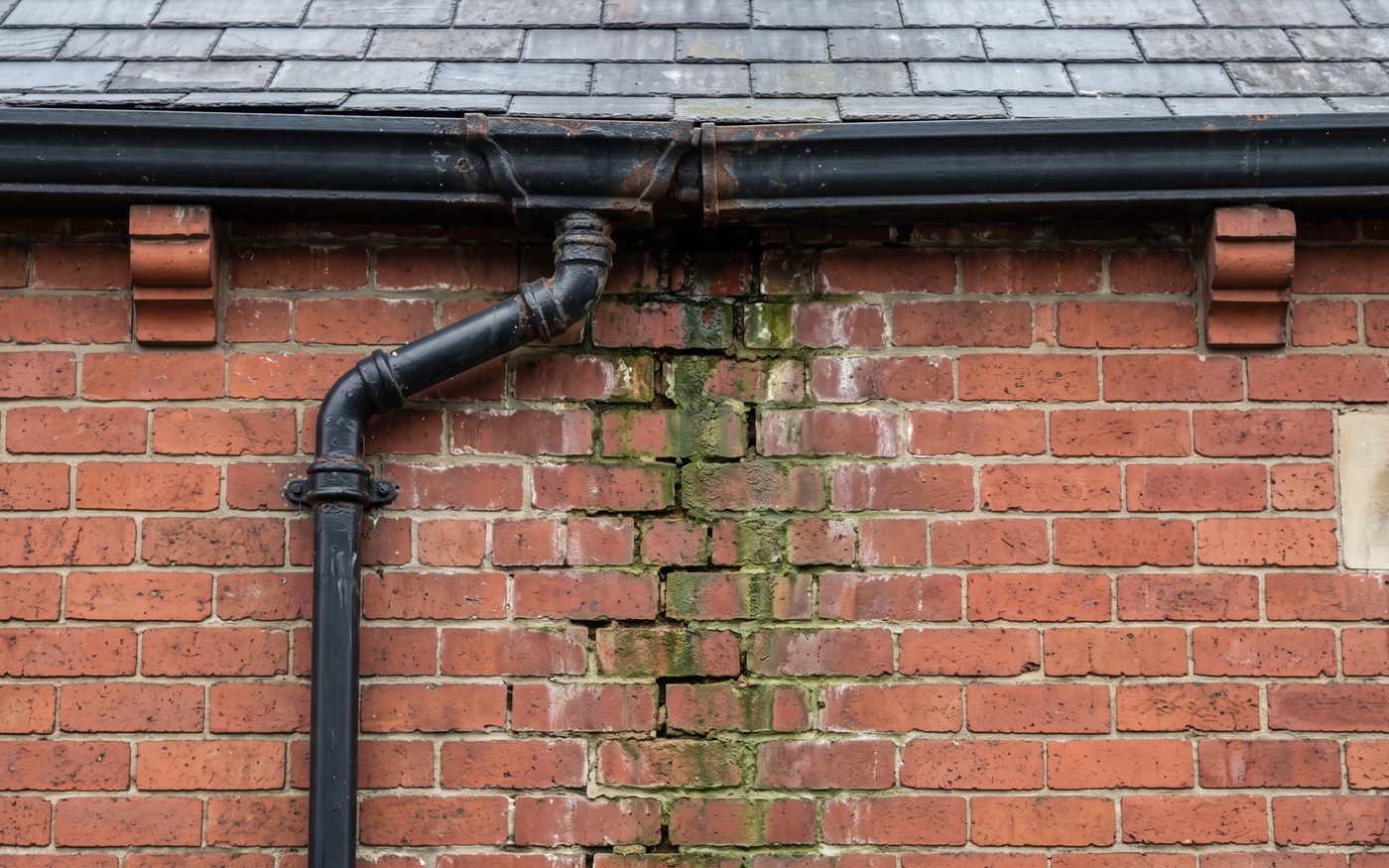
The repointing that looks wrong from the road nearly always failed on one of four things: the colour, the sand, the joint profile or the finish. Get all four right and a repointed gable sits next to the untouched front elevation without anyone noticing. Get one wrong and it announces itself for the next thirty years.
Colour
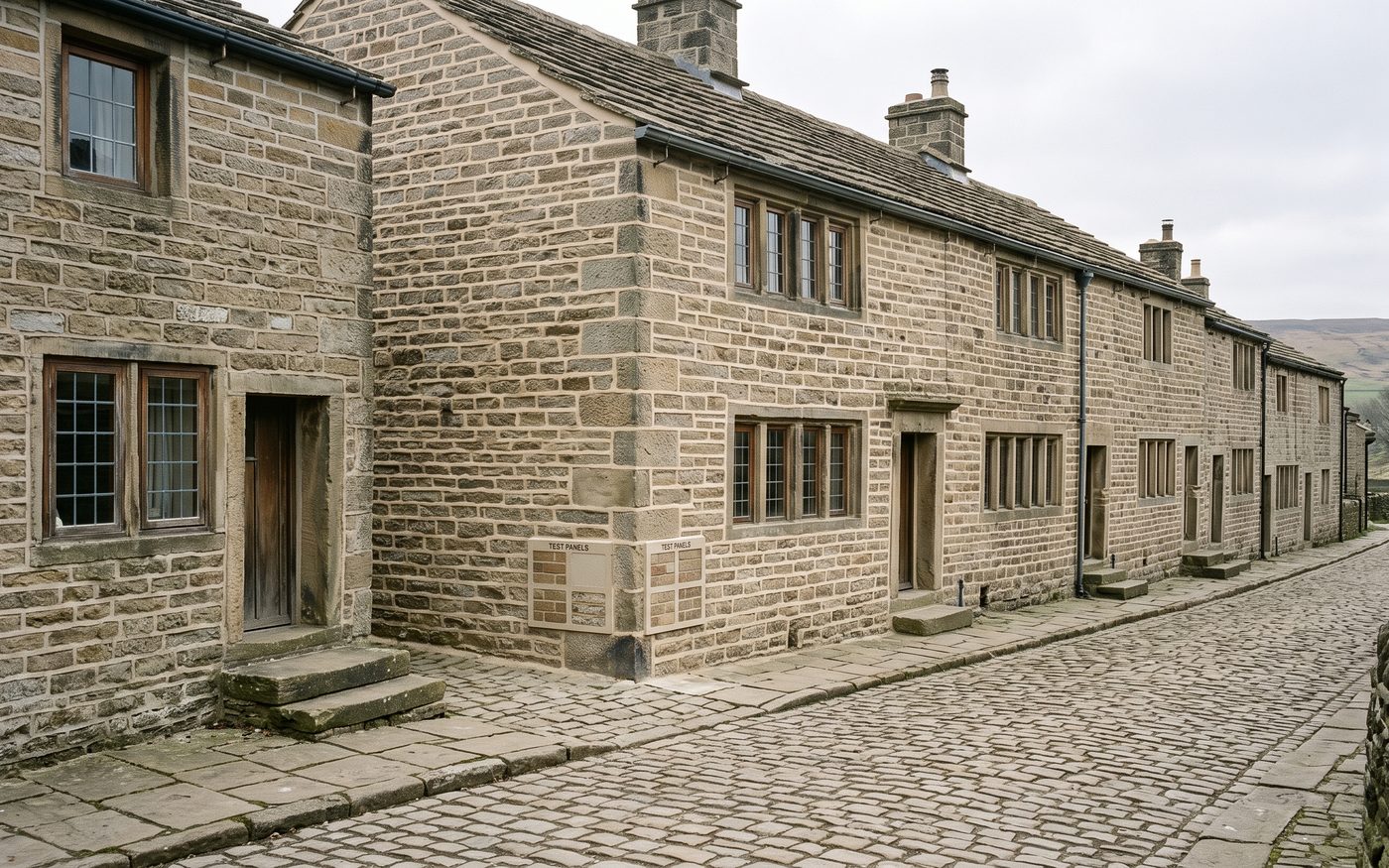
Mortar colour comes almost entirely from the sand, not the cement or lime. Round here the original mortar on brick terraces is usually a warm buff to mid-grey; on stone it's paler and sandier. We match by taking a piece of the existing sound mortar, looking at it dry and wet, and trying sands from two or three local merchants until the dry sample matches. On lime work the sand does all the work; on cement work we'll use a proportion of lime and, occasionally, a pigment to hit a specific shade — but pigment on its own is how you end up with the pink or chocolate joints you see on badly done jobs.
Sand
The grain size and shape show in the finished joint. Fine building sand gives a smooth, dead-looking joint; a sharp sand with some grit in it gives the slightly open texture that old lime pointing has. Most Victorian and Edwardian mortar in Rochdale and Oldham was made with a coarse local sand, and a smooth modern sand will look wrong next to it even if the colour is right.
Joint profile
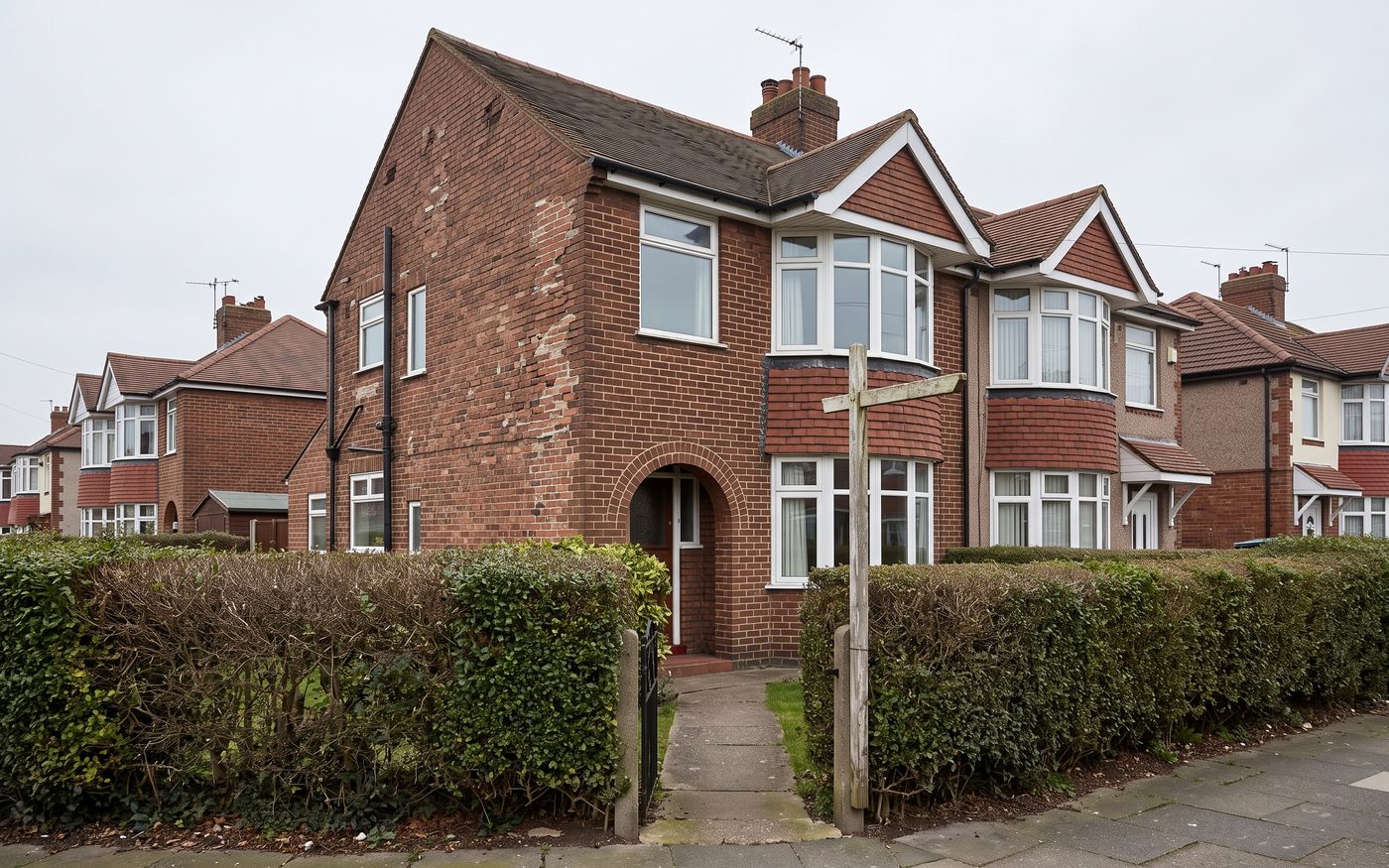
The profile is the shape of the finished joint — weather struck, flush, bucket handle or recessed. Most brick houses round here are weather struck; most stone is flush or slightly recessed. Using a different profile on one elevation is the single most visible mistake, and a bucket-handle joint on a weather-struck house will stand out from the end of the street. We copy what's there, on the same wall, and where a previous repoint has already used the wrong profile we'll tell you and give you the choice.
Finish and joint width
Mortar smeared onto the brick faces, joints wider than the original because the raking-out was careless, or "ribbon" pointing sitting proud of the brick, all show. The joint should finish exactly at the brick edge, with clean arrises and no staining on the face. That's down to the pointer, not the materials.
Why new pointing looks pale at first
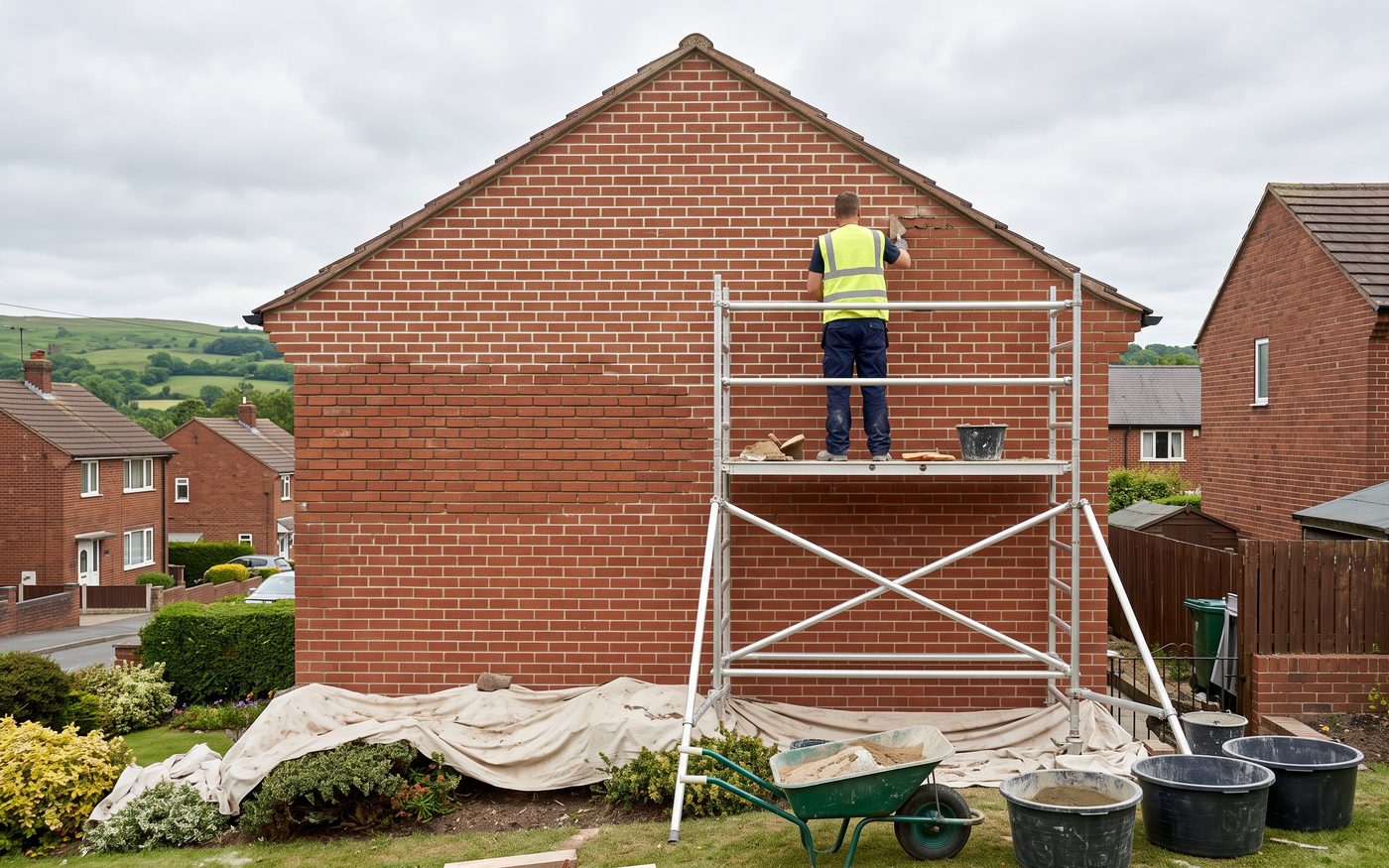
Fresh mortar is lighter than the same mortar a year later. It darkens as it fully cures and picks up weather, and lime pointing in particular goes from almost white to its final colour over the first six to twelve months. A newly pointed wall will look a shade lighter than its neighbours for that first year; that's normal and it settles. What doesn't settle is the wrong colour or the wrong profile.
Doing a section rather than the whole wall
If only part of an elevation needs doing — a strip under a leaking gutter, a section of spalled brick — we rake and repoint to a natural line: a course, a corner, a window edge. Stopping in the middle of a wall leaves a visible boundary whatever the match. And we'll always put a small sample up first on the wall in question so you can see the colour against your own brick before we start.